Celebrate Teej with Punjabi women as they swing into the monsoon season with songs, swings, and age-old traditions that welcome the rains.
As the first monsoon clouds gather over Punjab, women across the region begin preparing for one of their most beloved celebrations - Teej. This festival, typically falling in July or August, welcomes the rainy season with swings, songs, and centuries-old traditions that celebrate womanhood and nature's bounty.
The Festival of Swings
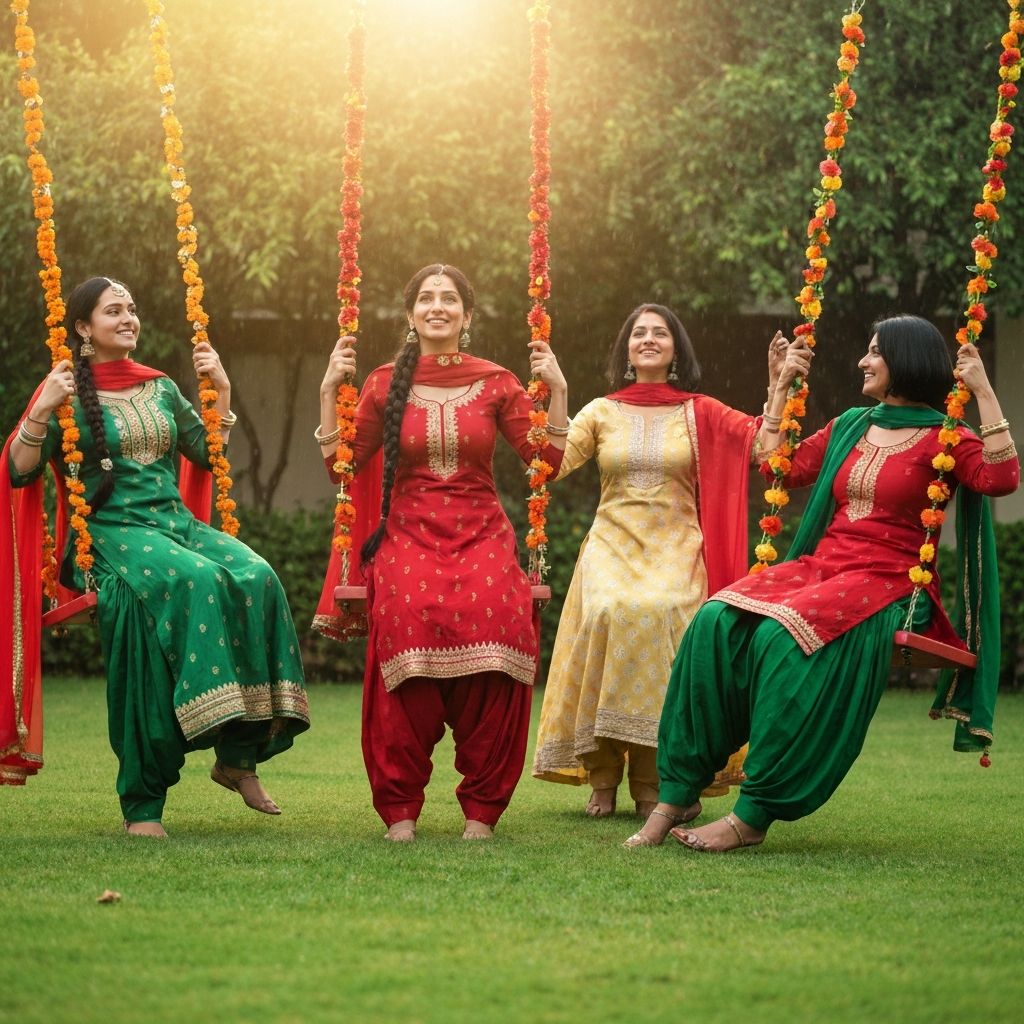
The most iconic image of Teej is that of women on decorated swings, their colorful dupattas flying in the monsoon breeze. In villages and cities alike, swings are hung from trees, and women of all ages gather to sing traditional Teej songs while swaying back and forth.
These aren't ordinary swings - they're decorated with flowers, ribbons, and sometimes even fairy lights. The higher you swing, the more joy you bring to the gathering, or so tradition says.
Traditional Celebrations
Teej preparations begin days in advance. Women apply intricate mehndi (henna) designs on their hands, dress in their finest clothes (traditionally green, symbolizing the lush monsoon landscape), and wear glass bangles that will tinkle with every movement.
The celebration includes special foods, particularly ghewar (a honeycomb-shaped sweet) and various fried snacks that pair perfectly with the rainy weather. Married women often return to their maternal homes to celebrate with their mothers and sisters.
Songs of Longing
Teej songs, called geet, are an essential part of the celebration. These songs speak of love, longing, and the joy of the monsoons. Many are playful, teasing newly married women about their husbands, while others express the deep bond between daughters and their maternal families.
"When the clouds gather and the peacocks dance, Teej brings daughters home to their mothers' arms." - Traditional Teej song
In modern Punjab, Teej has evolved but retained its essence - a celebration of women, rain, and the eternal cycle of seasons that has sustained Punjabi culture for millennia.