Explore the magnificent architecture of Harmandir Sahib, where Mughal and Rajput styles blend to create one of the world's most awe-inspiring religious structures.
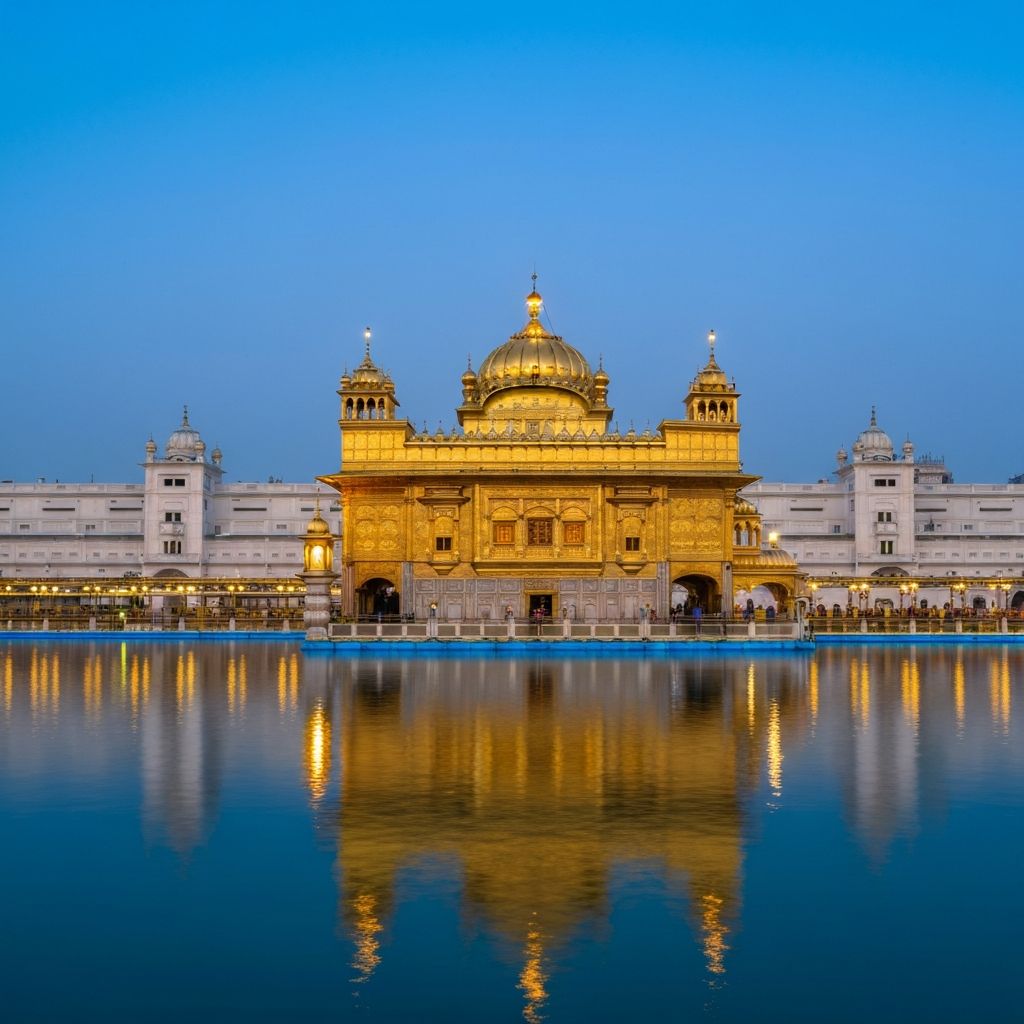
Rising majestically from the sacred pool of Amrit Sarovar, the Golden Temple - or Harmandir Sahib - is not just the holiest shrine of Sikhism but also an architectural masterpiece that has inspired wonder for over four centuries. Its unique design philosophy and construction tell a powerful story of inclusivity, spirituality, and artistic excellence.
A Design of Inclusivity
Unlike Hindu temples that traditionally have only one entrance, the Golden Temple has four entrances - one on each side. This revolutionary design choice, mandated by Guru Arjan Dev Ji, symbolizes that people of all castes, creeds, and directions are welcome. The temple is also built at a lower level than the surrounding area, requiring devotees to descend to enter - a reminder of the importance of humility.
The Architectural Blend
The Golden Temple represents a unique fusion of Hindu and Islamic architectural traditions. The dome, inspired by the inverted lotus flower, draws from Hindu temple architecture, while the intricate pietra dura (stone inlay work) and geometric patterns reflect Mughal influence. This blend symbolizes the Sikh philosophy of unity and universality.
The Gold Plating
The temple's distinctive gold covering was added by Maharaja Ranjit Singh in the early 19th century. Over 400 kilograms of gold leaf covers the upper floors, giving the temple its popular name. The gold shimmers brilliantly in sunlight and glows ethereally at night when illuminated.
The Causeway and Sarovar
The 60-meter causeway (Guru's Bridge) connecting the main shrine to the circumambulatory path represents the journey from mortality to immortality. The sacred pool, whose water is believed to have healing properties, surrounds the temple, creating perfect reflections that have inspired countless artists and photographers.
"The temple belongs to everyone who comes with love and devotion." - Sikh teaching
Today, the Golden Temple complex includes not just the main shrine but also the Akal Takht (the seat of Sikh temporal authority), the Central Sikh Museum, and the world's largest community kitchen that feeds over 100,000 people daily.