Uncover the beautiful tradition of Phulkari, Punjab's distinctive embroidery art where every stitch tells a story and every piece is a labor of love passed down through generations.
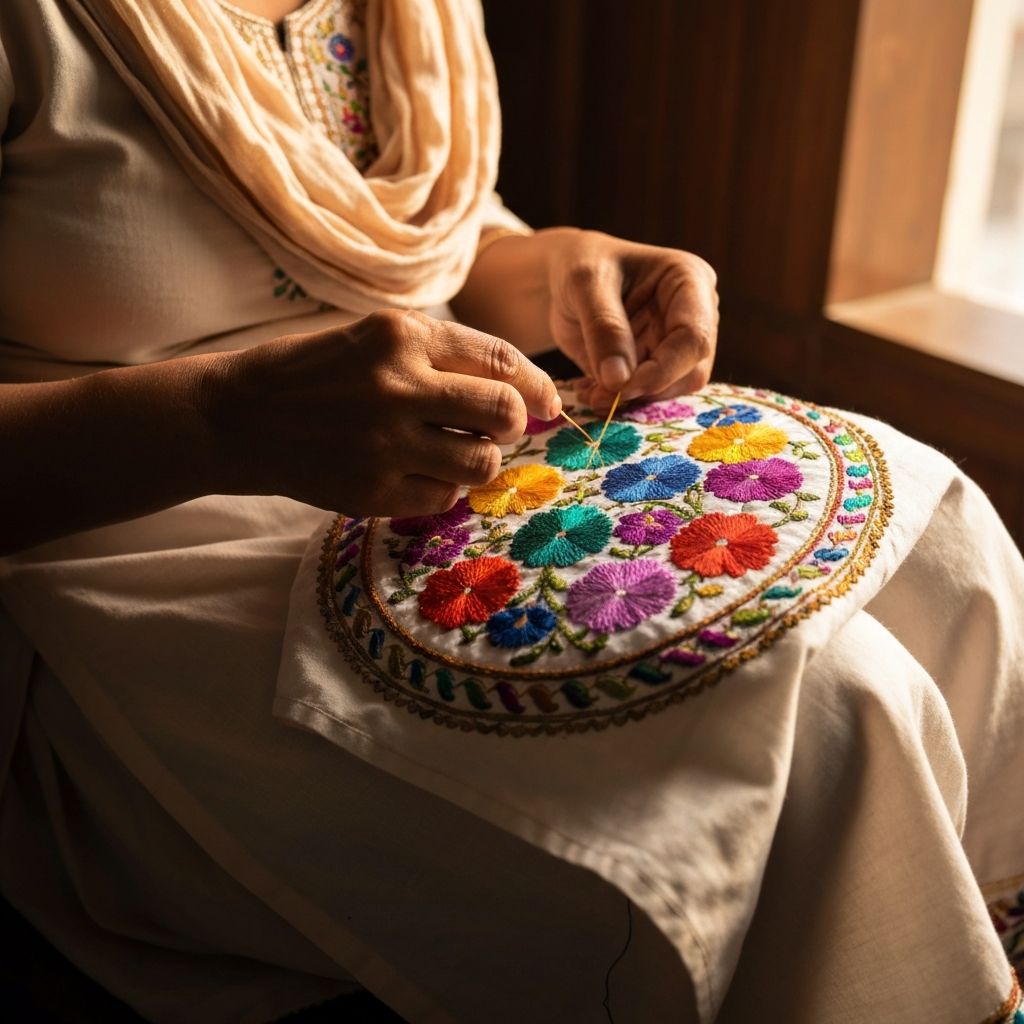
In the homes of Punjab, generations of women have sat together, needles in hand, creating vibrant tapestries of color that tell stories of love, celebration, and community. This is phulkari - literally meaning "flower work" - an embroidery tradition that is one of Punjab's most precious cultural treasures.
A Tradition of Love
Historically, phulkari was never created for sale. Instead, it was made by women for their daughters and granddaughters, often starting when a girl was born and completing it by the time she was married. Each piece carried the love, blessings, and prayers of the women who created it.
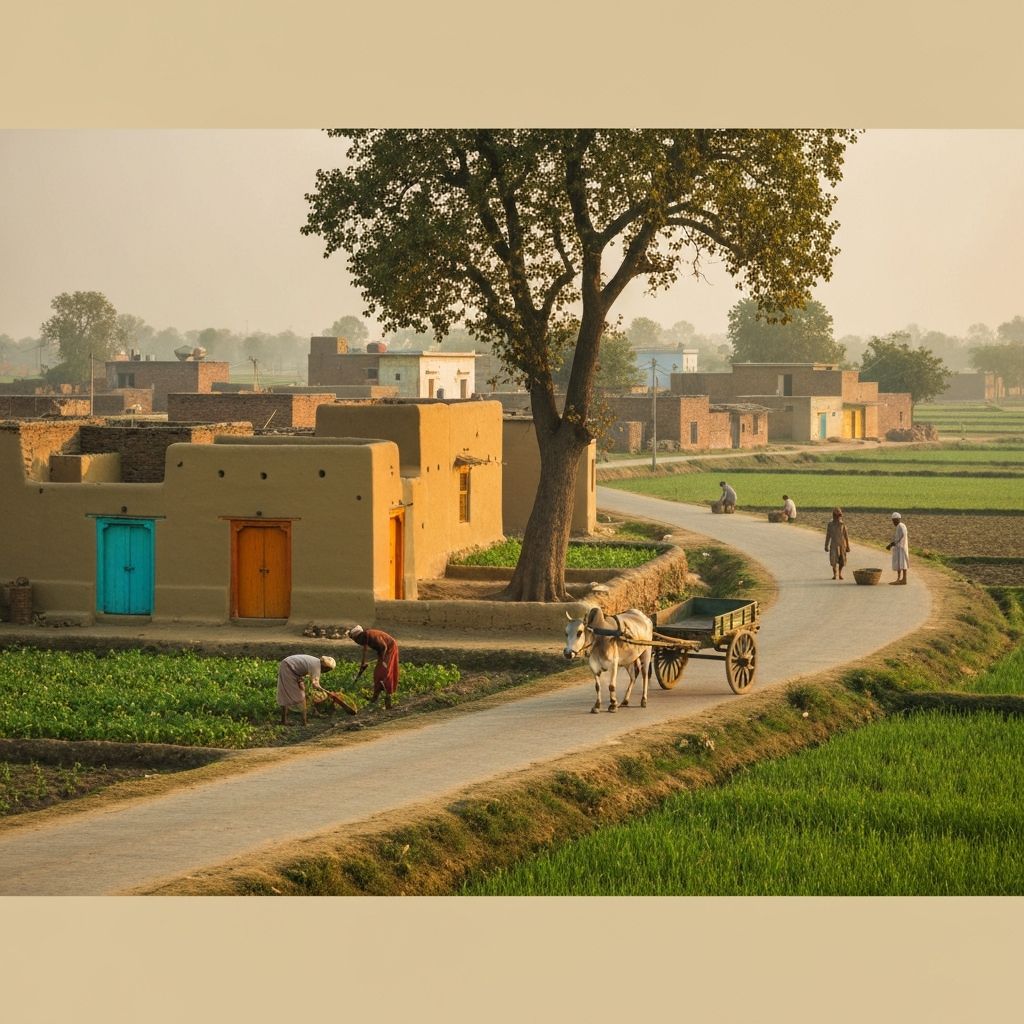
The tradition was particularly strong in the rural areas of Punjab, where women would gather in groups, sharing stories and songs as they embroidered. These sessions were important social occasions, passing down not just skills but wisdom from one generation to the next.
The Art and Technique
Phulkari uses a distinctive darning stitch called the "holbein stitch," worked from the wrong side of the fabric so that the threads appear on the front. The base fabric is typically khaddar - handwoven cotton cloth - often in deep red or earthy tones.
The embroidery uses untwisted silk thread (pat) in vibrant colors - magentas, oranges, yellows, and greens - creating geometric patterns that seem to bloom across the fabric like flowers in a garden.
Varieties of Phulkari
Different types of phulkari serve different purposes:
- Bagh: The most elaborate form, where embroidery covers the entire cloth
- Chope: Gifted to the bride by her grandmother, featuring specific border patterns
- Sainchi: Depicting scenes from daily life and folk stories
- Thirma: White embroidery for widows
"Every stitch in phulkari carries a mother's love and a daughter's dreams." - Punjabi saying
Today, phulkari is being revived by artisans and designers who recognize its beauty and cultural significance. While machine-made versions exist, true phulkari remains a handcrafted art that connects us to the patient, loving hands of Punjab's women through the ages.