Explore the rich tradition of the Punjabi turban - a symbol of honor, identity, and artistry that has crowned Punjabi heads for centuries.
In Punjab, a turban is never just a piece of cloth. Known as pagri, dastar, or pag, the turban is a symbol of honor, identity, and spiritual significance that has been an integral part of Punjabi culture for centuries.
More Than Cloth
For Sikhs, the turban holds particular religious significance. The tenth Guru, Guru Gobind Singh Ji, established the turban as one of the articles of faith for the Khalsa. It represents equality, honor, self-respect, courage, and piety. Sikh men and some women wear turbans as a constant reminder of their commitment to their faith and community.
Beyond religious significance, turbans in Punjab have historically denoted social status, profession, and regional identity. Different communities developed their own distinctive styles, colors, and tying methods.
The Art of Tying
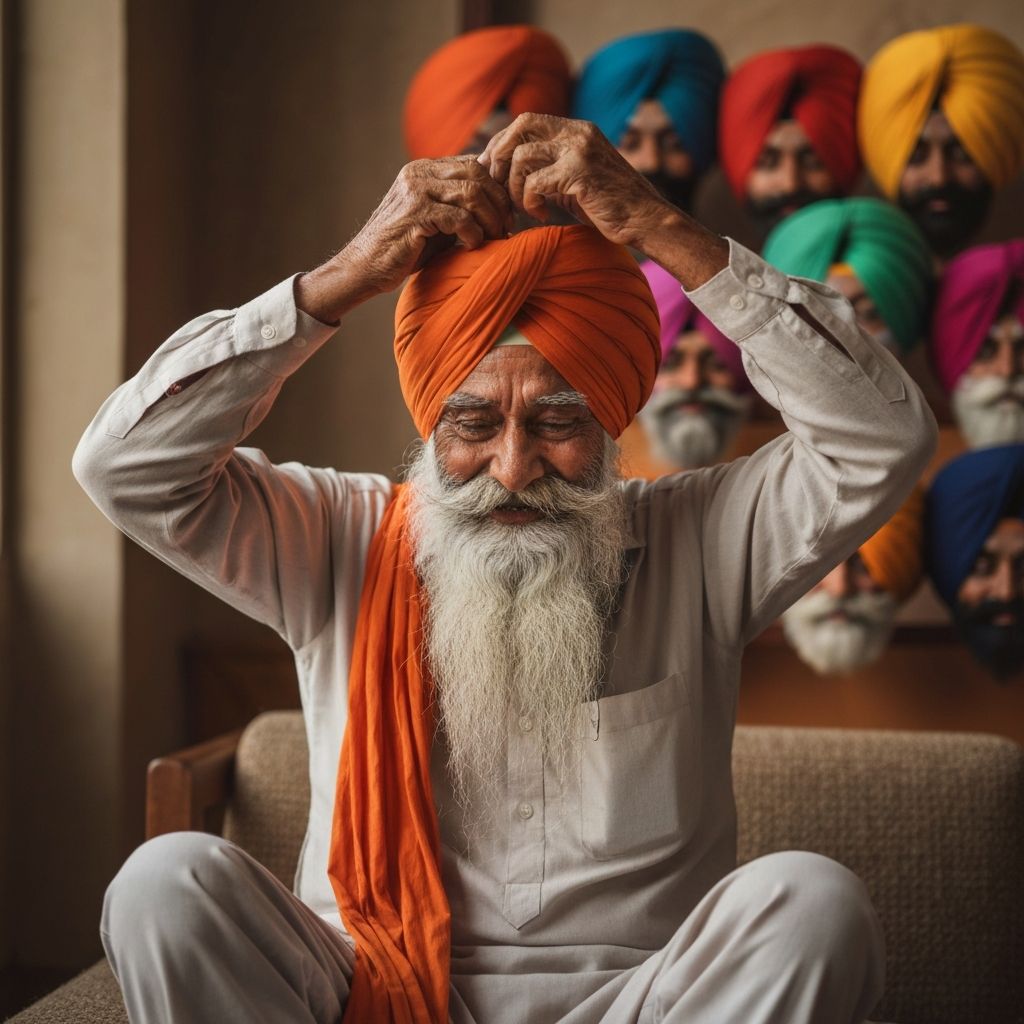
Tying a turban is an art that takes years to master. A typical Sikh turban requires 4-7 meters of cloth, which is carefully pleated, wrapped, and tucked to create a neat, dignified appearance. Different styles exist:
- Dumalla: A round turban favored by Nihang Sikhs
- Patiala Shahi: An elegant style from the royal court of Patiala
- Amritsar style: A simpler, everyday style
- Kenyan style: A modern, streamlined approach popular among diaspora youth
Colors and Occasions
Colors carry meaning in the turban tradition. Saffron represents courage and sacrifice, blue is associated with the Akali tradition, white denotes peace and purity, and pink is often worn at weddings. Black turbans are typically reserved for protests or mourning.
"A Sikh without his turban is like a king without his crown." - Punjabi saying
Today, the turban continues to evolve, with young Sikhs creating new styles that honor tradition while expressing individual identity. It remains one of the most visible and proud symbols of Punjabi heritage worldwide.